Product Overview
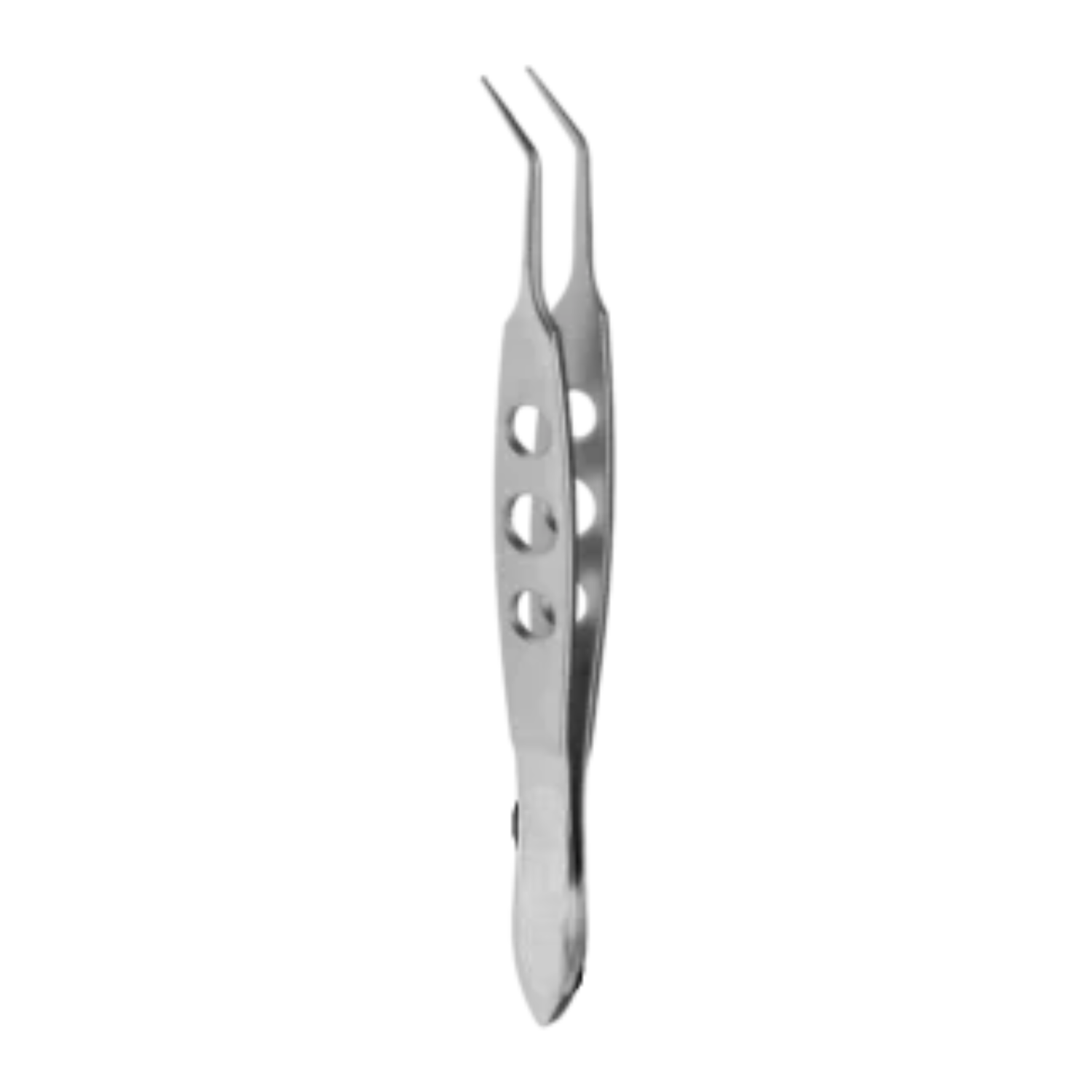
The 551104 Kelman-McPherson Forceps are high-precision ophthalmic microsurgical forceps characterized by their 1×2 interlocking teeth, an integrated 4.5mm tying platform, and a 45-degree angled shaft design. Mounted to an ultra-stable, premium Castroviejo spring handle, this “beast” is engineered to clear the patient’s brow and orbital rim effortlessly. Forged from high-tensile surgical steel, its delicately micro-milled teeth provide an unyielding “dead-lock” grip on rigid tissues or lens borders, while the highly polished tying platforms deliver a “liquid-smooth” tactile response during fine wound closures.
Key Features
-
Precision-Engineered 1×2 Teeth: Features one superior tooth that nests perfectly into two opposing inferior teeth at the very tip. This micro-toothed configuration provides the mechanical authority to firmly fixate tissue edges or slip-free lens structures without slipping.
-
Integrated 4.5mm Tying Platform: The distal working zone features a 4.5mm, precision-ground flat tying platform positioned directly behind the teeth. This allows the surgeon to seamlessly transition from structural tissue manipulation to looping and securing ultra-fine sutures (such as 9-0 to 11-0 monofilaments).
-
45° Angled Kelman-Style Shafts: The shafts are hand-set at a sharp 45-degree angle, optimizing the surgeon’s approach angle and maximizing visualization under the surgical microscope. This configuration completely clears the orbital profile, allowing for non-obstructive access to superior or temporal wound corridors.
-
Ergonomic Castroviejo Spring Handle: Equipped with a premium Castroviejo style wide-profile handle with integrated spring tension. This provides an incredibly stable, high-finesse grip that minimizes hand fatigue and ensures the instrument tips close with micrometric predictability.
-
Surgical-Grade Resilience: Manufactured from premium, hardened stainless steel. It is built to maintain its hyper-precise tooth alignment and fine spring tension through thousands of high-heat sterilization cycles.